For many drivers throughout Middleton, Madison, Waunakee, Cross Plains, Black Earth, and the surrounding Dane County area, an all-wheel-drive (AWD) vehicle provides confidence during Wisconsin’s unpredictable weather. Whether you’re navigating icy roads on your morning commute, driving through a snowstorm, or simply dealing with wet pavement during seasonal transitions, AWD systems help improve traction and stability when conditions become challenging.
What many vehicle owners don’t realize, however, is that the same system that helps improve handling and safety also introduces additional maintenance requirements. Unlike a two-wheel-drive vehicle, an AWD vehicle contains multiple drivetrain components that must work together continuously. These systems are highly effective, but they are not maintenance-free.
At Wrench Auto Service, our ASE-certified technicians routinely diagnose and repair AWD-related issues on popular vehicles such as the Ford Explorer, Ford Escape, Chevrolet Traverse, Chevrolet Equinox, GMC Acadia, and Jeep Grand Cherokee. Through decades of combined experience and advanced diagnostic testing, we’ve seen how routine maintenance can prevent costly repairs and help Wisconsin drivers get the most out of their vehicles.
Does AWD Require More Maintenance?
Yes. AWD vehicles generally require more maintenance than two-wheel-drive vehicles because they contain additional components such as transfer cases, front and rear differentials, driveshafts, CV axles, and sophisticated electronic control systems. These components require periodic inspections, fluid services, and maintenance to ensure reliable performance and prevent premature wear.
Understanding Why AWD Systems Require More Maintenance
The primary reason AWD vehicles require more maintenance comes down to complexity. A traditional front-wheel-drive vehicle transfers power through a relatively simple drivetrain. An AWD vehicle, on the other hand, must distribute power to all four wheels through a network of interconnected mechanical and electronic components.
Transfer cases, differentials, driveshafts, wheel bearings, and axle assemblies all play a role in ensuring power reaches the wheels that need traction. When one component begins to wear, it can place additional strain on surrounding components. This interconnected design means that a minor maintenance issue can sometimes develop into a major repair if left unaddressed.
One of the most common misconceptions our technicians encounter is the belief that AWD systems contain “lifetime fluids.” While some manufacturers use that terminology, fluid degradation still occurs due to heat, contamination, and normal wear. Over time, differential fluid and transfer case fluid lose their protective properties, increasing the likelihood of internal component wear.
A common scenario we see at Wrench Auto Service involves drivers who have diligently changed their engine oil but have never serviced their transfer case or differentials. By the time symptoms appear, significant wear may already be occurring inside the drivetrain.
Why Tire Maintenance Plays a Critical Role in AWD Health
If there is one maintenance item that has the greatest impact on AWD longevity, it is tire maintenance.
Many drivers are surprised to learn that mismatched tire tread depth can damage AWD components. Because AWD systems constantly monitor wheel speed, differences in tire circumference can trick the system into thinking one wheel is slipping. As a result, the transfer case and differentials may continuously compensate, creating unnecessary stress.
We frequently encounter transfer case failures that can be traced back to uneven tire wear or improper tire replacement practices. Installing one new tire alongside three significantly worn tires may seem harmless, but it can create enough variation to affect drivetrain operation.
This issue becomes especially important in Wisconsin, where potholes, road hazards, and seasonal tire replacements are common. Drivers throughout Middleton and Madison often replace a single damaged tire without realizing the potential impact on their AWD system.
Routine tire rotations, proper inflation, and regular inspections performed during professional vehicle diagnostics can help identify issues before they lead to expensive repairs.
Technician Insight: One of the most common mistakes drivers make is ignoring uneven tire wear. Many AWD failures begin long before a warning light appears, and tire condition is often one of the earliest indicators that something may be wrong.
The AWD Maintenance Services Drivers Most Frequently Overlook
Oil changes tend to receive most of the attention, but several other services are equally important for AWD vehicles.
Transfer case fluid service helps protect internal gears responsible for distributing power between axles. Over time, contamination and heat reduce the fluid’s ability to lubricate and protect these components. Neglecting this service can result in accelerated wear and costly repairs.
Differential fluid changes are equally important. Front and rear differentials contain precision gears operating under significant loads. Fresh fluid helps control temperature, reduce friction, and prevent premature wear.
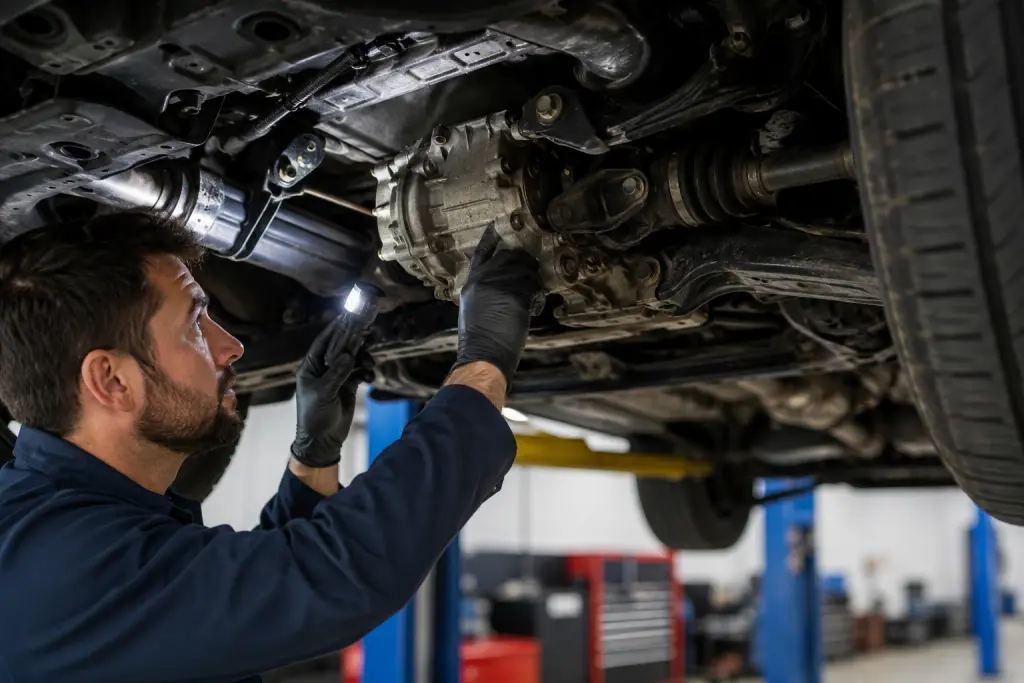
Driveline inspections are another critical component of preventative maintenance. During these inspections, technicians evaluate CV axles, driveshafts, wheel bearings, seals, and related components for signs of wear.
Drivers commuting between Middleton and Madison often accumulate significant mileage throughout the year. Even when a vehicle feels normal, gradual wear may already be occurring. Identifying concerns early can help avoid larger repairs later.
For example, a small vibration caused by a worn driveshaft component may seem insignificant initially. Left unchecked, that vibration can increase wear throughout the drivetrain and eventually require more extensive repairs.
How Wisconsin Winters Accelerate AWD Wear
Wisconsin presents unique challenges for AWD vehicles. Snow, ice, road salt, and freeze-thaw cycles place additional demands on drivetrain systems.
Road salt is particularly problematic because it accelerates corrosion on metal components. Over time, corrosion can affect wheel bearings, axle assemblies, suspension components, and drivetrain hardware.
Drivers in communities such as Cross Plains and Black Earth often encounter rural roads and changing road conditions that can further increase wear on suspension and drivetrain components. Meanwhile, daily commuters traveling between Middleton and Madison may experience prolonged exposure to highway conditions that accelerate component fatigue.
One advantage of routine inspections is that they allow technicians to identify corrosion-related issues before they become serious safety or reliability concerns.
How Neglected Maintenance Leads to Expensive Repairs
AWD systems are designed to be durable, but neglect can become expensive very quickly.
A transfer case replacement can cost thousands of dollars. Differential repairs can also be costly, particularly when internal gear damage occurs. In many cases, these repairs could have been prevented through routine fluid services and inspections.
In some situations, drivetrain concerns may also contribute to broader performance issues that require specialized engine diagnostics and repair to properly identify the root cause.
Pro Tip: The cost of routine transfer case and differential maintenance is often only a small fraction of what drivers may spend replacing damaged drivetrain components.
Frequently Asked Questions About AWD Maintenance
Does an AWD vehicle require more maintenance than a two-wheel-drive vehicle?
Yes. AWD systems contain additional components such as transfer cases, differentials, driveshafts, and electronic controls that require periodic inspections and fluid services. While maintenance costs may be slightly higher than a two-wheel-drive vehicle, proper care helps prevent significantly more expensive drivetrain repairs.
Can mismatched tires damage an AWD system?
Yes. Differences in tire size, tread depth, or overall circumference can force the AWD system to constantly compensate for perceived wheel slip. Over time, this additional strain can accelerate wear on transfer cases, differentials, and other drivetrain components. This is one of the most common AWD-related issues our technicians encounter.
How often should an AWD system be inspected?
Most AWD vehicles should have their drivetrain inspected during routine maintenance visits and before the start of winter. Regular inspections allow technicians to identify fluid leaks, worn components, uneven tire wear, and developing drivetrain issues before they become major repairs, especially in Wisconsin’s demanding driving conditions.
Protect Your AWD Vehicle with Professional Maintenance
AWD vehicles offer tremendous advantages for Wisconsin drivers, but they also require a proactive approach to maintenance. Regular fluid services, tire care, driveline inspections, and advanced diagnostics can help extend the life of your drivetrain and reduce the likelihood of costly repairs.
At Wrench Auto Service, our ASE-certified technicians combine decades of experience with advanced diagnostic capabilities to help drivers throughout Middleton, Madison, Waunakee, Cross Plains, Black Earth, and Dane County keep their vehicles performing at their best. As a NAPA Gold Center, we stand behind our work with a 3-Year / 36,000-Mile Warranty and provide conveniences such as loaner vehicles, shuttle service, and vehicle pickup and delivery when available.
For additional information about professional automotive standards, visit the ASE-certified technicians resource center.
If your AWD vehicle is due for maintenance, showing signs of drivetrain wear, or simply hasn’t had its system inspected recently, now is the perfect time to take a proactive approach. Schedule an appointment with Wrench Auto Service today or call us directly at (608) 831-5557 to speak with our team and keep your vehicle ready for whatever Wisconsin roads bring next.

Meet Bert, Wrench Auto’s owner! With more than 30 years of experience in the automotive repair industry, his commitment to excellence has earned him ASE certification as a Certified Master Technician with an L1 Advanced Engine Performance Specialist designation. He is also a Master ASE Engine Machinist and ASE Undercar Specialist. Bert graduated from Madison Area Technical College’s Automotive Technology program with an Associate Degree in Applied Science. He enjoys the daily challenges the automotive industry presents and takes pride in helping customers keep their vehicles running reliably. Outside of work, Bert enjoys spending time with his wife, Kelli, their two daughters, and their dog, Scout. Together, they enjoy camping, boating, fishing, snowmobiling, and other outdoor family activities.